


Dead by Extraction
4.3452.00 Reviews
App Specs
- Version
- 1.0.9
- Updated On
- License
- Free
- Downloads
- 500,000+
- Developer
- PIXEL RABBIT LIMITED
- Categories
- Role Playing
- Platform
- Android
Screenshots
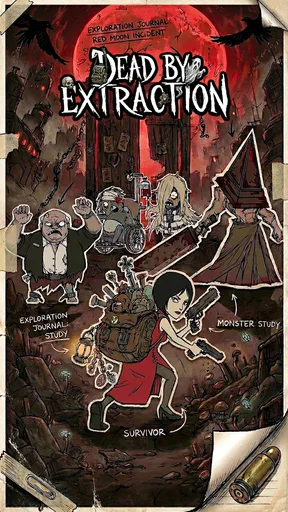
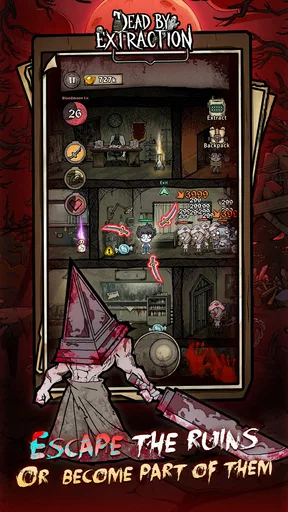
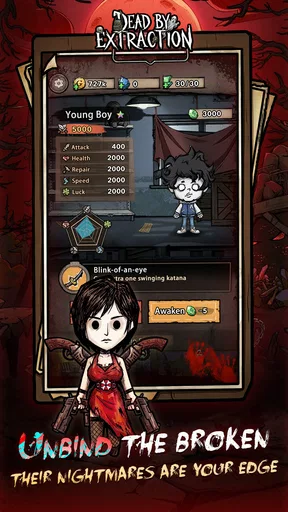
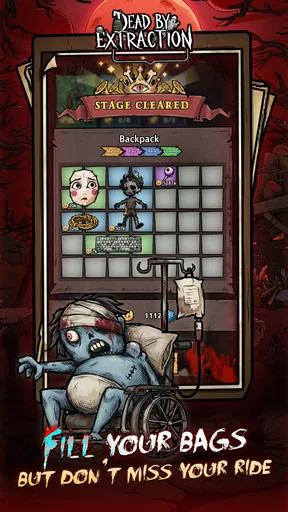
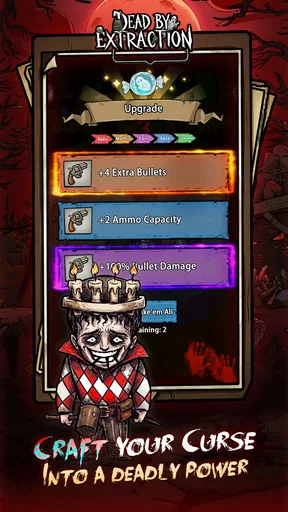
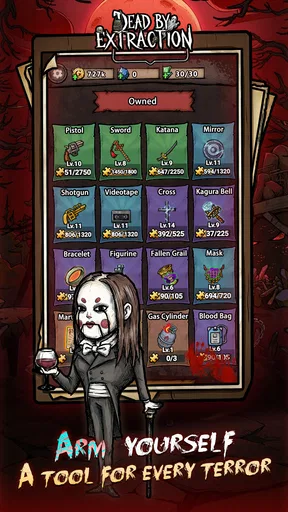
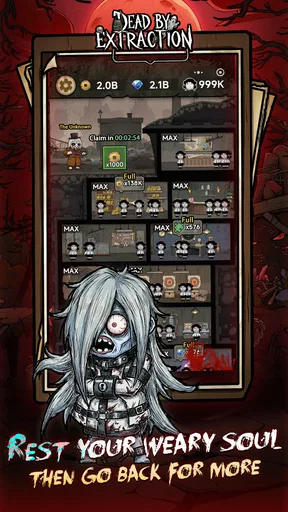
 Analysis by AppCompare
Dead by Extraction is a role-playing game built around a simple promise: enter danger, collect what you can, fight your way through the night, and try to leave with enough progress to make the next attempt worthwhile. I found that loop more interesting than the short store wording suggests. It is not just about winning battles; the real tension comes from deciding how far to push a run before the possible reward stops justifying the risk.
That makes it a good fit for players who enjoy games where small decisions accumulate. I like being asked whether I should take one more encounter, search a little longer, or protect what I have already earned. The game comes from PIXEL RABBIT LIMITED and is available free of charge, with optional purchases ranging from $0.99 to $99.99 per item. It is rated for Everyone 10+, so it aims at a broad audience, although its survival-focused atmosphere and repeated combat will appeal most to players who enjoy pressure rather than relaxed role-playing.
How the first sessions establish a reason to keep playing
The opening hours work best when treated as a learning period rather than a race toward maximum power. My first goal was not simply to clear every threat. It was to understand what a successful night actually demanded: when to engage, when to conserve resources, and when leaving was smarter than chasing another reward. That distinction gives the early game a useful rhythm because each attempt teaches something even when the outcome is disappointing.
The extraction idea also gives ordinary actions more weight. In a conventional role-playing game, defeating an enemy often feels like the end of a small task. Here, the fight is only part of the decision. The result matters because it affects whether continuing is sensible. I found myself evaluating a run in stages: first looking for a safe way forward, then checking whether the rewards justified the danger, and finally deciding whether the current haul was worth protecting.
That is a stronger early objective than a long checklist of disconnected errands. It gives the player a practical question to answer every few minutes: am I building toward a better next attempt, or am I gambling away a good position? Even without relying on a complicated explanation, the loop communicates its priorities through play. Survival is not passive. It is an active choice to stop before ambition turns into a mistake.
One useful habit is to define a personal exit point before starting a run. I found that this prevents the familiar “one more fight” problem. If I entered with the intention of collecting a modest amount and leaving once the route became dangerous, I played more deliberately. Without that limit, the game can encourage overconfidence, especially after a few successful encounters make the next threat feel easier than it really is.
The early goals are therefore less about memorizing a perfect route and more about building judgment. Players who want immediate access to elaborate character builds may find the beginning restrained. Players who enjoy learning through repeated attempts will probably appreciate the way the game turns caution into a meaningful skill.
Worth Reading Before You Choose

EA SPORTS FC Mobile 26 Is a Bigger Football Game, but It Takes Time

Flipboard Shows What News Apps Must Do Beyond the Feed

Switching to Android Auto Means Rethinking Your Driving Routine

Google Calendar Makes a Crowded Week Easier to Manage

Ludo King Makes the Most of the Minutes Between Plans

Baby Panda World Brings Quick Play to Modern Phones, but Its Game Library Feels Busy
Progress feels clearest when you measure decisions, not only rewards
The most satisfying progress signal is not necessarily a dramatic jump in power. For me, it was noticing that I could read a situation earlier. I began to recognize when a fight would consume too much of my remaining safety and when a tempting reward was not worth the exposure. That kind of improvement is easy to overlook because it does not always appear as a large number on the screen, but it changes the quality of every later attempt.
Dead by Extraction benefits from this personal form of progression because the central loop is built around risk. A run can feel better even when the final haul is modest if I handled the danger more intelligently. I learned to separate two questions: did I gain something useful, and did I make a good decision? The second question matters more over time. A careless victory can teach less than a controlled retreat.
For new players, I recommend treating the first several sessions as experiments. Test how aggressively you can move through a threat, notice which situations make you lose control, and remember the point at which your confidence usually becomes reckless. This approach also makes the game less frustrating. Instead of seeing every failed attempt as wasted time, I could identify the exact decision that caused the run to unravel.
There is a trade-off here. Players who need constant, obvious rewards may feel that the game’s progress is slower than expected. Its strongest feedback comes from improved choices and accumulated understanding, not just from unlocking something after every short session. That is a deliberate style, but it means the game asks for patience before its structure becomes satisfying.
The current version is 1.0.9, and the player base gives it a 4.3 average from around 16 thousand ratings. Those figures suggest that the basic loop has found an audience, but they do not replace personal preference. I would pay more attention to whether you enjoy repeating a situation to improve your response than to the rating itself. This is a game where the appeal depends heavily on your tolerance for learning through risk.
The challenge curve rewards restraint more than speed
The difficulty is most engaging when it makes me reconsider my habits. Rushing can feel efficient at first, but a fast approach becomes dangerous when it leaves fewer options later. The better strategy is often to preserve flexibility. I prefer entering a difficult stretch with enough room to react rather than arriving there after spending everything on earlier encounters.
That creates a challenge curve based on pressure and consequences rather than simple enemy strength. Even if a battle looks manageable, the surrounding circumstances can make it a poor choice. A player who focuses only on whether a single opponent can be defeated may miss the larger question: what condition will I be in afterward, and will I still have a realistic route out?
I found this especially important during longer play sessions. Early attempts encouraged me to chase every available opportunity. Later, I started treating the run as a limited budget of attention and safety. That change made the game feel deeper without requiring me to play faster. The challenge came from managing the whole attempt rather than winning isolated moments.
There is also a psychological curve. After a successful run, the next attempt feels safer than it is. Familiarity can become a trap because the player remembers the reward but forgets the circumstances that made the previous success possible. My best results came when I repeated the same discipline instead of assuming the last outcome proved I could take greater risks.
If you prefer role-playing games that let you overpower most problems through preparation, this may not be the right match. The extraction structure keeps uncertainty in the foreground. Preparation helps, but it does not remove the need to decide when to stop. I would choose a more traditional progression-focused game when I want a predictable climb and a clearly controlled sense of dominance.
Why the loop can retain attention without feeling endless
The retention pressure comes from unfinished possibilities. A failed attempt can leave me thinking about the decision that ended it, while a successful one can make me curious about how much farther I could have gone. That is an effective form of motivation because it connects the next session to a specific personal question rather than a vague promise of more content.
Still, this pressure has to be managed. The same loop that makes a near-success exciting can become tiring if every attempt feels like a reset. I found shorter, focused sessions more enjoyable than forcing myself to continue after concentration had dropped. Once I began making careless choices, the game stopped feeling tense and started feeling repetitive. Taking a break was not just sensible; it protected the quality of the decision-making that the game depends on.
Another practical tip is to judge a session by the number of useful lessons it produced, not only by the size of the final reward. This mindset reduces the urge to chase an ideal run. It also makes experimentation safer. I could try a more aggressive approach, observe where it failed, and return with a clearer plan instead of feeling that the entire session had to end in success.
The free entry point helps people test this loop without committing money first. Optional purchases are present, with individual items priced from $0.99 up to $99.99. I would advise setting a personal spending limit before playing, particularly if repeated attempts make you feel that a purchase might solve frustration. The core question is whether you enjoy improving your decisions; spending should not become a substitute for learning the game’s risk pattern.
This is also where the age guidance matters. The Everyone 10+ rating makes it accessible to a wide range of players, but parents and younger players should still consider whether a survival loop with repeated danger and loss pressure is comfortable for them. Accessibility in age rating does not mean the emotional style will suit every player.
A realistic way to fit it into an ordinary day
Imagine having a short break after work or school. You open the game intending to complete one careful attempt, not to spend the whole evening. The best way to approach that session is to choose a narrow objective: learn one dangerous section, test a conservative route, or leave once the run reaches a clearly acceptable point. This keeps the session from turning into an unplanned string of increasingly risky attempts.
If the first run ends badly, I would avoid immediately repeating the exact behavior. Instead, identify the moment when the situation changed. Did you continue because the reward looked attractive? Did you enter the next fight without enough room to recover? Did you mistake familiarity for safety? Answering one of those questions gives the next attempt a purpose and makes a short play session feel productive.
On a successful run, the same discipline applies. Do not assume the next run should be longer simply because the previous one went well. A safe extraction is valuable precisely because it preserves progress. I found that stopping on a good result helped me return later with more confidence and less desperation. The game is at its best when I am making choices, not chasing an imaginary perfect score.
Who should play, and who should look elsewhere
I recommend Dead by Extraction to players who like role-playing games with a survival edge, repeated attempts, and meaningful decisions about risk. It suits people who enjoy learning patterns, improving through failure, and balancing ambition against the safety of leaving. It is also a good option for someone who wants a game that can turn a short session into a complete little story: enter, take a chance, recover from a mistake, and decide whether the night is over.
I would be more cautious recommending it to players who dislike losing progress, repeating similar situations, or stopping when a reward is still available. Those players may prefer a more forgiving role-playing alternative where battles and exploration produce steady gains without the same extraction pressure. Likewise, if your ideal game is built around a long narrative, relaxed exploration, or highly predictable character growth, this may feel too focused on the tension of the run.
The game’s strongest quality is that its goals, challenge, and pacing point in the same direction. The objective encourages caution, the difficulty punishes careless momentum, and the next attempt remains attractive because there is always a better decision to try. Its main limitation is equally clear: that structure can feel repetitive when you are not in the mood to manage risk.
For me, the progression verdict is positive, with one condition: approach it as a game about improving judgment rather than collecting rewards as quickly as possible. The free download makes it easy to find out whether that rhythm suits you, and the broad age rating keeps the entry barrier low. Just remember that optional purchases can reach $99.99 per item, so deciding your budget in advance is sensible.
My final recommendation is to try it if the thought of leaving a reward behind feels as interesting as claiming it. Dead by Extraction does not need to overwhelm you with complexity to create tension. Its appeal comes from the small, uncomfortable choices that shape each night. When I played with patience, every extraction felt earned. When I chased too much, the game reminded me that survival is not the same as victory. That balance gives PIXEL RABBIT LIMITED’s role-playing game a distinct identity and makes it worth considering for anyone who enjoys pressure with a purpose.
With over 500 thousand installs, it has already reached a substantial audience, and its 1.0.9 release provides a clear starting point for anyone curious about the loop. I would not call it a universal recommendation, but for the right player, Dead by Extraction turns a simple night-run structure into a steady test of nerve, timing, and self-control.
Pros
- Fast-paced matches make every escape attempt feel tense and rewarding.
- Different survivor and killer abilities encourage varied playstyles.
- Team coordination can turn a losing match around quickly.
- Short rounds make it easy to fit a game into a busy schedule.
- Atmospheric maps and sound design create strong horror tension.
Cons
- Match quality depends heavily on stable internet and responsive servers.
- New players may struggle against experienced killers and coordinated teams.
- Some progression and customization options require considerable grinding.
- Random teammates can make objectives and escapes frustrating.
- Mobile controls may feel less precise during intense chases.
FAQs for Dead by Extraction
What is Dead by Extraction?
Dead by Extraction is a horror-themed action game centered on escaping dangerous situations while managing limited resources and making quick decisions. Its gameplay typically combines exploration, tense encounters, objectives, and survival mechanics. Before downloading, players should check the official description and screenshots because features, story details, available modes, and the overall experience may vary depending on the platform and version.
Is Dead by Extraction free to download and play?
The download price and payment model for Dead by Extraction can depend on the store, device, region, and current publisher promotions. Some versions may be free to install but include advertisements, optional purchases, or locked content. It is worth checking the Google Play Store or App Store listing carefully before installing, especially the in-app purchase section and any information about subscriptions or premium upgrades.
Can Dead by Extraction be played offline?
Offline availability is an important detail for a game built around suspense and action. Some parts of Dead by Extraction may work without an internet connection, but online features, updates, advertisements, cloud saves, account services, or multiplayer-related functions may require connectivity. Players should review the latest store description and test the game after installation if they need reliable play while traveling or using limited mobile data.
What devices are compatible with Dead by Extraction?
Compatibility depends on the operating system, hardware requirements, and the specific version distributed for Android or iOS. Players should confirm the minimum supported operating-system version, available storage, processor performance, and required permissions before downloading. Older phones or tablets may install the game but provide slower loading, reduced visual quality, overheating, or occasional performance problems during demanding scenes.
Is Dead by Extraction suitable for children?
Dead by Extraction is designed around horror, danger, and potentially intense action, so it may not be appropriate for younger children or players sensitive to frightening imagery. Parents should check the official age rating, content descriptors, advertising policy, chat features, and in-app purchase options before allowing access. Reviewing the store listing and device parental controls is recommended, particularly for shared family devices.


